
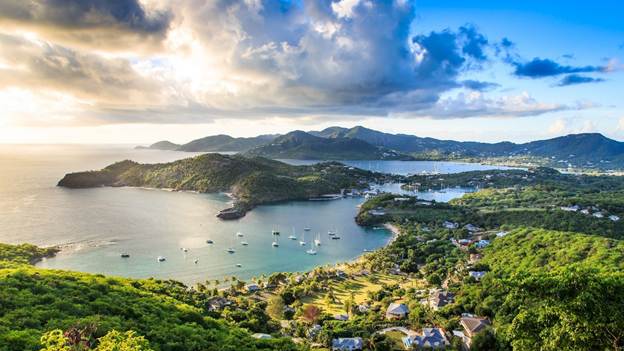
Antigua and Barbuda has become increasingly popular with people moving from around the world, offering several immigration routes to meet the needs of investors, retirees, professionals, and families. Its Citizenship by Investment (CBI) program stands out because it allows eligible applicants to obtain citizenship through a qualifying investment. Together with other options such as residence permits and work permits, this makes Antigua and Barbuda a leading choice for people planning to move to the Caribbean.
One reason Antigua and Barbuda ranks highly with prospective residents is its relatively stable economy. Over the years, the country has diversified into tourism, real estate, banking, and technology, which open up opportunities for professionals and entrepreneurs. The government has also focused on creating an environment that welcomes foreign investment and business development, which adds to its appeal for those looking to expand into the Caribbean.
Another appealing feature is the tax environment. Antigua and Barbuda does not levy personal income tax on employment income for residents, and there are no capital gains, inheritance, or wealth taxes, which appeals to investors and retirees alike. The Citizenship by Investment Programme also gives successful applicants a second passport and the right to live in the country, with a minimal physical presence requirement.
Cultural heritage and diversity also attract newcomers. With its annual Carnival, local festivals, and distinctive food scene, Antigua and Barbuda offers a rich culture that residents can quickly become part of. English is the official language, which makes it easier for many expats to adapt, and welcoming locals help newcomers feel at home.
This guide covers the full range of immigration pathways, including the CBI program, long-term residence options, work permits, and family immigration. Whether you are an investor looking to contribute to the economy, a retiree seeking a peaceful lifestyle, or a professional expanding your career in the Caribbean, it will give you the essential information to navigate the immigration process.
How to Immigrate to Antigua and Barbuda: Essential Steps for Success

There are several ways to immigrate to Antigua and Barbuda, each suited to different goals and circumstances. Here are the key immigration routes.
A. Citizenship by Investment (CBI)
Antigua and Barbuda Citizenship by Investment is probably the best-known route and is considered by many people who want full citizenship. The program allows individuals and families to apply for citizenship through a qualifying investment in the country. The Antigua and Barbuda passport offers visa-free or visa-on-arrival access to more than 150 destinations, including the Schengen Area and the United Kingdom. Note that the United States has applied partial entry restrictions to Antigua and Barbuda nationals since January 1, 2026.
The main investment options under the CBI program are:
- Real Estate Investment: Applicants can invest in a government-approved real estate project, with a minimum investment of US$300,000. The property must be held for at least five years, making this a good option for applicants who want to own property alongside citizenship.
- National Development Fund (NDF): A non-refundable contribution to the NDF, which supports national development projects. The minimum contribution is US$230,000 for a main applicant or a family of up to four, with additional amounts for larger families, plus fees.
- Business Investment: Entrepreneurs can qualify through an investment of at least US$1.5 million in an approved business, or through a joint investment in an approved business, subject to the program’s job creation and other requirements.
A fourth option is a contribution to the University of the West Indies (UWI) fund, from US$260,000.
The program appeals to investors seeking both financial opportunities and global mobility. Applicants must have a clean criminal record and pass background checks, be in good health, and show that the funds come from lawful sources. Citizens by investment must also spend at least five days in Antigua and Barbuda during the first five years after obtaining citizenship.
B. Residence Permits
For those not ready to commit to citizenship, Antigua and Barbuda offers residence options. These allow applicants to live in the islands and, with the appropriate permit, to work, without obtaining citizenship immediately. Residence can be a good option for people who want to experience life in Antigua and Barbuda before making a permanent commitment.
Residence may be temporary or permanent. Temporary residence is usually granted for a limited period and must be renewed, while permanent residence allows long-term stay without frequent renewals. Applicants generally need to prove financial stability and provide background checks and health clearances. Processing times vary depending on the type of application.
This pathway suits retirees, professionals, and families who want to experience life in Antigua and Barbuda while keeping their original nationality. It may also be a first step before a later citizenship application.
C. Work Permits
If you are moving to Antigua and Barbuda for work, the country issues work permits to qualified foreign professionals who have secured a job in the country. Work permits are a good option for people with skills in demand in industries such as tourism, construction, healthcare, and technology.
The application generally requires a valid job offer, proof of qualifications, and evidence that the applicant will contribute to the local economy. Work permits are issued for a set period depending on the terms of employment and can usually be renewed.
Applicants typically submit their job offer, academic qualifications, medical certificates, and background checks to the relevant labor authorities. Once approved, the permit allows the holder to work and stay in Antigua and Barbuda, making it a practical route for those who want to live in the Caribbean while contributing to the local workforce.
D. Family-Based Immigration
Antigua and Barbuda also allows family immigration, so applicants can include spouses, children, or dependent parents. Family members can apply for citizenship or residence together with the main applicant, provided the family relationship and dependency are proven.
Under the Citizenship by Investment program, family members can be included in a single application, making it easier for families to obtain citizenship together. Eligible dependents can include dependent children under 31, parents and grandparents aged 55 or over, and certain other dependents. Each family member must provide the required documents, such as birth certificates, medical certificates, and police certificates, and will go through background checks and medical tests.
Key Requirements and Documentation
Immigrating to Antigua and Barbuda requires several important documents and meeting certain eligibility criteria. Whether you apply for CBI, a work permit, or a residence permit, knowing what documents are needed helps make the application smoother. Below are the most common requirements for each pathway.
Standard Requirements Across All Immigration Routes
Whichever route you choose, you will need to present certain documents early in the application. These prove your identity, financial position, and health status. The most common documents are:
- Valid Passport: A valid passport that is not close to expiring, generally valid for at least six months from your arrival in Antigua and Barbuda. It serves for identification and, if you apply for citizenship, for issuing your Antigua and Barbuda passport.
- Birth Certificate: A certified copy of your birth certificate to prove your identity and age. For family applications, birth certificates are required for all family members.
- Police Certificates: For security reasons, applicants must provide police certificates from their country of citizenship and from other countries where they have lived for extended periods, as specified by the authorities. This forms part of the due diligence process to confirm that the applicant has no criminal record.
- Medical Certificate: All applicants need a medical certificate confirming that they do not have any communicable diseases and are in good health. The examination must be carried out by an authorized medical professional.
- Proof of Financial Standing: Required for most routes, including work permits, residence permits, and Citizenship by Investment. Bank statements, proof of income, and tax returns can be used. The amount depends on the route; for CBI, applicants must show they have the means to make the required investment or contribution.
- Proof of Investment: Required for Citizenship by Investment applications. This can be proof of a real estate purchase, a receipt for your NDF or UWI contribution, or documents showing the amount invested in an approved business.
- Job Offer: A work permit requires a job offer from an employer in Antigua and Barbuda, stating the position, salary, and length of employment. The employer may also need to provide supporting documents, such as proof of company registration.
- Family Documents: For family applications, additional documents are needed, such as a marriage certificate for spouses, school records for children, and proof of dependency for parents or other dependents.
Requirements Specific to Each Immigration Route
While most documents are required across all routes, some routes have additional requirements:
A. Requirements Specific to CBI
Citizenship by Investment offers several investment options, each with its own documentation requirements.
1. Real Estate Investment:
- Proof of investment in a government-approved real estate project, with a minimum investment of US$300,000.
- Real estate contracts or deeds confirming ownership.
- Proof that the project is government-approved.
- Commitment to hold the property for at least five years.
2. National Development Fund (NDF) Contribution:
- Receipts for the NDF contribution, which starts at US$230,000 for a main applicant or a family of up to four.
- Documentation showing your financial ability to make the required contribution.
3. Business Investment:
- Proof of investment of at least US$1.5 million in an approved business (or the required share of a joint investment), with documentation of any required job creation.
- A business plan with financial projections.
- Company registration and tax records of the business in Antigua and Barbuda.
B. Requirements Specific to Residence Permits
Applicants who plan to stay for an extended period, whether temporarily or permanently, need to provide financial and personal documents to support their application. Typical requirements include:
1. Temporary Residence:
- Proof that you can support yourself financially for the period of stay.
- Proof of health insurance coverage while in Antigua and Barbuda.
- Police certificates from the countries where you have lived in recent years showing no criminal record.
2. Permanent Residence:
- Proof of a qualifying period of legal residence in Antigua and Barbuda, as set by the immigration authorities.
- Evidence that you have no criminal record in Antigua and Barbuda.
- Documents showing your contribution to the country, such as investment, business activity, or employment creation, where applicable.
C. Work Permit Requirements
For work permits, the documentation largely depends on the job offer and the employer’s responsibilities:
1. Job Offer Documentation:
- A formal offer letter from an employer in Antigua and Barbuda detailing your role, salary, and length of employment.
- Proof that the employer is registered with the local authorities and in good standing.
- Where required, evidence that no suitable local candidate is available for the role.
2. Qualifications:
- Educational certificates and professional licenses relevant to the job.
- A resume or curriculum vitae showing relevant experience.
Life in Antigua and Barbuda

Living in Antigua and Barbuda offers a unique combination of natural beauty, rich culture, and a relaxed Caribbean lifestyle. When planning a move, the cost of living, healthcare, education, and cultural integration are all important considerations.
Cost of Living
The cost of living in Antigua and Barbuda depends on your lifestyle and location. Typical expenses include:
- Housing: Rent for a one-bedroom apartment in or near St. John’s averages around US$1,300 to US$1,800 per month, and a three-bedroom apartment around US$1,500 to US$2,500. Prices can be lower outside the main centers.
- Utilities: Basic utilities (electricity, cooling, water, and garbage) typically cost around US$200 to US$300 per month, depending on usage and property size.
- Groceries: Typical prices include milk (1 liter) at about US$2.60, a loaf of bread at about US$2.50, rice (1 kg) at about US$4, a dozen eggs at about US$4 to US$5, and chicken (1 kg) at about US$8.50.
- Dining Out: A meal at an inexpensive restaurant costs about US$11, while a three-course meal for two at a mid-range restaurant averages about US$75.
- Transportation: Public transportation is limited, with bus fares of a few US dollars per trip. If you prefer to drive, gasoline costs about US$1.50 per liter, and fuel, insurance, and maintenance for a compact car add up to several hundred US dollars per month.
Healthcare and Education
- Healthcare: Antigua and Barbuda has both public and private healthcare services. Contributing residents are covered for many services under the national Medical Benefits Scheme, but many expats also take out private health insurance. Private clinics typically charge around US$50 to US$150 per visit, depending on the type of care.
- Education: Public schools provide free education to the children of residents and citizens. Many expatriates choose private or international schools offering international curricula, with annual tuition typically ranging from about US$5,000 to US$11,000, depending on the school and grade.
Cultural Integration and Community Life
Cultural integration is part of settling in Antigua and Barbuda. Locals are known for being friendly and hospitable, and newcomers have plenty of opportunities to take part in the country’s lively social life. Antiguan culture blends African, Caribbean, and British influences, reflected in its music, food, and festivals. One of the highlights of the year is Carnival, a vibrant celebration held from late July to early August with parades, music, and dancing across the islands.
While English is the official language, Antiguan Creole is widely used in casual conversation. Learning a few Creole words can enrich your experience and help you connect with your community. Joining local groups can also help you build friendships and connections as a newcomer.
Leisure activities are widely accessible. Hiking, snorkeling, diving, and boat tours are popular, and Antigua and Barbuda is known for some of the Caribbean’s finest beaches. From water sports and sailing to relaxing in the sun, the islands are well suited to an active outdoor lifestyle.
Life in Antigua and Barbuda combines modern facilities with the relaxed rhythm of Caribbean living. Living costs depend on your lifestyle, with options for both budget-conscious residents and those seeking a more upscale lifestyle. Expatriates can choose between public and private healthcare and education, and the vibrant culture and social scene make it easy to feel part of the community.
Application Tips and Advice
Immigrating to Antigua and Barbuda can be straightforward if you are well prepared. Whether you apply for Citizenship by Investment, a residence permit, or a work permit, following the correct procedures and avoiding common pitfalls will help your application run smoothly. The tips below can help your application and your move to Antigua and Barbuda go as smoothly as possible.
1. Make Sure All Documentation Is Complete and Accurate
One of the most common problems applicants face is incomplete or inaccurate documentation. Every stage requires documents, and missing or inadequate paperwork can delay or even lead to the refusal of an application. The CBI program, for example, requires proof of investment, police certificates, and medical examinations, so check that every document meets the official requirements.
- Check personal information: Make sure names, addresses, and dates match across your forms, passport, birth certificate, and other documents. Any discrepancies may delay processing.
- Keep copies of everything: Keep copies of all documents for your records and in case the authorities request more information.
- Seek assistance when needed: If you are unsure about a document, especially one involving legal or financial details, ask an experienced immigration advisor or legal professional for guidance.
2. Understand the Timeline and Be Patient
Processing times vary depending on the program or permit. Citizenship by Investment applications typically take several months, and residence permits can also take a few months. Delays can occur, especially when additional information is requested, so plan for this.
- Start early: Some documents, such as police certificates or medical certificates, take time to obtain.
- Stay in touch: Follow the status of your application and respond promptly to any requests for information.
3. Be Ready for Due Diligence
Due diligence is a crucial part of any immigration application, especially for Citizenship by Investment. The authorities carry out thorough background checks, including your financial records, criminal history, and other personal information.
- Be transparent: Be honest and complete on all application forms. If something in your background may raise questions, disclose it and explain it with supporting documents.
- Check your finances: Make sure your financial documents are up to date and clearly show your ability to make the required investment or support yourself and your family. This includes bank statements, tax returns, and proof of employment.
4. Consult an Immigration Expert
While some applicants handle the process themselves, many find that working with an immigration consultant or lawyer makes it easier. For CBI applications, an authorized agent is required. Experienced advisors understand the requirements and processes and can help you handle potential challenges.
- Informed guidance: An advisor can help you identify the program that best fits your goals and the correct process to follow.
- Fewer errors: Advisors help reduce the risk of mistakes or incomplete applications, which can cause delays.
- Clear communication: Experienced advisors are familiar with the relevant authorities’ procedures, which can help resolve issues more efficiently.
5. Be Aware of Scams and Fraudulent Services
As with any popular immigration destination, Antigua and Barbuda can attract fraudulent service providers who offer shortcuts or guarantee approval for a high fee. Research carefully and make sure you are working with a licensed, reputable consultant.
- Check credentials: For CBI applications, make sure your agent is authorized under the program, or that your advisor is affiliated with a recognized professional body.
- Avoid offers that sound too good to be true: Promises of record-time processing or guaranteed approval should raise suspicion. The process always involves due diligence and verification.
- Read reviews: Look for reviews or testimonials from previous clients to help verify a consultant’s reputation.
6. Plan for the Long-Term Transition
Approval is only the beginning of your move to Antigua and Barbuda. Plan for life after approval, including settling into a new home, finding work if needed, integrating into the local community, and learning local customs.
- Look for housing early: Research areas that suit your lifestyle and budget. Antigua and Barbuda offers town living, rural areas, and coastal communities.
- Explore job opportunities: If you plan to work, start your search early. Tourism, financial services, healthcare, and construction are among the main sectors.
- Join the community: Local clubs, expatriate groups, and social organizations can help you build connections.
Conclusion
Antigua and Barbuda is an attractive destination for people seeking a change of lifestyle, a peaceful setting, or business opportunities. With its natural beauty, friendly people, and favorable tax environment, it offers individuals and families a strong opportunity for a new start. The Citizenship by Investment Programme, work permits, and residence permits provide a range of options for different needs and goals.
Understanding the requirements and timelines of your chosen route helps the application proceed smoothly. With proper preparation, patience, and careful attention to each step, you can reduce delays and complications, whether you apply for citizenship by investment, residence, or a work permit.
While the process may seem complex, an experienced immigration consultant or legal advisor can be very helpful, guiding you through the paperwork and eligibility criteria and helping you handle any challenges. Due diligence and transparency are essential to any immigration application, especially for Citizenship by Investment, where background checks and financial scrutiny are part of the process.
Once approved, moving to Antigua and Barbuda can be very rewarding. From its vibrant culture and landscapes to its community-oriented atmosphere, the country is a welcoming place for newcomers. With careful planning, openness to the local culture, and a willingness to explore opportunities, you can start your new life in Antigua and Barbuda well prepared.


